When our oldest, Emily, was just shy of 3, we learned that she had Autism. It was such a stressful time in our little family’s life. Our baby, Alex was almost a year old and was crying all of the time for unknown reasons to us then and my husband’s job was rocky and unpredictable, therefore, so was our income. I just remember feeling like our world was falling apart. For days after the diagnosis, I mourned. I cried randomly, usually during one of Emily’s many meltdowns of the day.
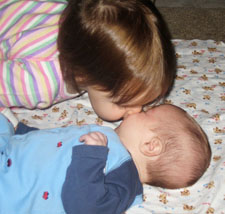 I had many afternoons on the floor holding Alex, laying next to Emily and all three of us sobbing in unison. They were crying because they couldn’t communicate and were in pain and I was crying because I thought I lost my daughter. Days later, I saw a glimpse of her, I saw a fighter. I saw who she really was, peaking through that Autism armor she was wearing. She wasn’t giving up and neither could I. Instead of “Why me? Why Emily? Why us?” my thoughts quickly became, “Autism? BRING IT.”
Previously, doctors all pointed their fingers at me. I wasn’t letting her grow up; I coddled her and treated her like a baby. She was 2 and shouldn’t be sleeping in bed with us. I was criticized for not sticking her in a crib and letting her cry herself to sleep. I was criticized for holding her all the time and even for not yet putting her in a preschool program. It was my fault; I was causing her to act this way. I gave her the behavior issues and caused her to not talk because I refused to withhold things until she “used her words”.
Continue reading “Mothering Autism”
 The following post, Attachment Parenting and Autism, has been submitted by Amy as part of the AP Month 2009 blog carnival. If you are interested in participating in the carnival, view the
  I can’t tell you when he changed. Looking back, there is no particular “ah ha!” moment. I know that one day Daniel said “Hat!” and I rejoiced. It was our first new word in months. I began to notice that my child could say “hat” and little else. He moved constantly, always on the go. He was into everything and still would not talk. When his peers were making simple sentences and observations, we still only had “hat.” Words were slowly disappearing. We justified, blaming our recent moves, new baby and changes in routine.